Simple Gardening Ideas: Gadgets You Don’t Need (But Might Love to Try!)
Handy Gardening Gadgets to Simplify Your Garden—
and the Ones You May Want to Rethink
Welcome to another installment of Getting Prepared for Gardening Season with Eat Local Education, where gardening doesn’t have to be expensive or complicated. This series has focused on simple gardening ideas, showing that you need far less “stuff” than you might think to get started. Gardening can be simple, affordable, and rewarding without all the bells and whistles.
But here’s the thing: when you find tools you love, you can’t help but share them! That’s why today, I’m highlighting a few handy gardening gadgets I adore. These aren’t “must-haves,” but they’ve made my gardening journey easier and more enjoyable. If they help you too, that’s a win!
And then there are those to rethink!
Handy Gardening Gadgets
The Seeder: Plant Seeds in Minutes!
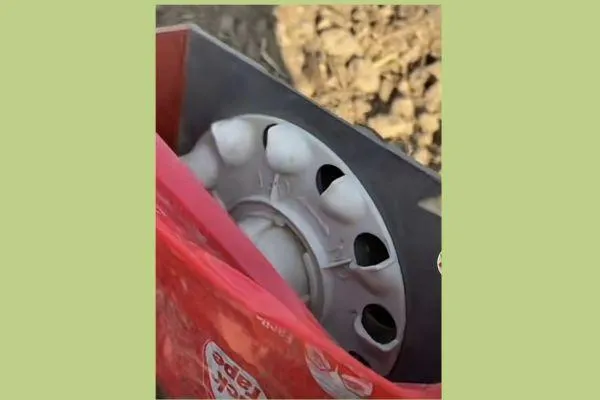
Want to plant seeds in minutes without straining your back? My mom handed down her trusty seeder to me—it’s 50 years old, held together with duct tape, and one of my most cherished tools. Modern versions are just as effective, with different attachments for various seed types.
Why I love it: You can sow your seeds quickly and adjust the depth settings to match the packaging instructions—if you want. But here’s a secret: seed depth doesn’t matter as much as you think! Adjust it or don’t. The choice is yours. (Pretty sure my bolts are rusted solid by now!)
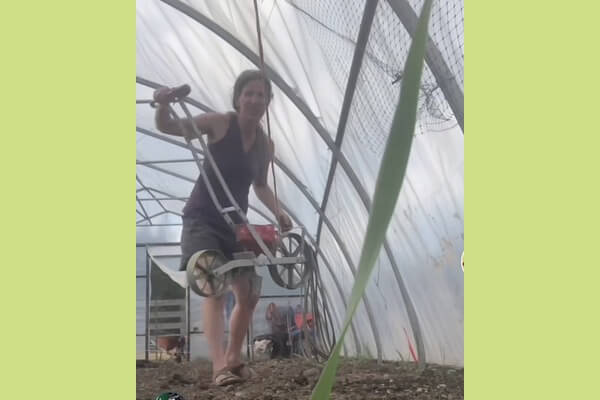
Vintage garden seeder used for direct seeding in Zone 3. Planting radishes in March.
The Walking Sprinkler: Water Your Garden Hands-Free
After planting seeds, it’s time to water them. Have you heard of traveling sprinklers? These gems saved me so much time in my large garden plot. Lay your hose along the desired path, turn on the sprinkler, and watch as it waters your garden for you!
Pro Tip: Leave wide pathways for the sprinkler to travel without hitting your plants (learned the hard way—my carrots survived, but my nerves didn’t!). This tool is so helpful that I plan my garden layout around it.
Disclaimer: The link is a much shorter water spout than I am used to. I have no recommendations for this particular system. But it gives you the idea.
Step- In Sprinklers with Elevated Reach: Targeted Watering Made Easy
For smaller spaces or targeted watering, step-in sprinklers are a game-changer. These sprinklers are easy to move, keep water above your plants, and avoid the dreaded “whack, whack, whack” from traditional models.
This might lead us into the ‘watering from above’ debate. I’ve never quite understood it. If you’re a ‘must water from below’ gardener, I’d love to chat with you more about it in the Thrive Tribe. There’s always more to learn from gardeners who do things differently!
Automation: Set It and Forget It
Want to make gardening even simpler? Automated timers can handle your watering schedule. Set them up once, and they’ll do the work for you. Ours even survives winter (though I don’t recommend testing that durability—yes, I left it outside last year). With this system, I only need to reposition the traveling sprinkler (if you have one) and turn it off if we’ve had rain. It’s that easy!
Added bonus: You can leave for a week and not fret!
Are Indoor Starts Worth It?
Notice something missing from my gardening recommendations? No starter trays. No grow lights. That’s intentional.
Even in my northern Zone 3 climate, I’ve found that direct seeding into the garden saves time, effort, and space. By skipping indoor starts, I avoid:
Rearranging my kitchen for seedlings
Rotating leggy sprouts
Hardening off plants
Transplanting and transplant shock
Buying extra potting soil, lights, and trays
Direct seeding has freed me from the stress of complicated gardening and timing it right. Want to give it a try? It's one of many simple ideas to make your gardening journey about More Food, Less Fuss.

Ready for a quick gardening tip? Watch the video now to get inspired by a simple, fuss-free gardening idea!👆
Garden Experiment Challenge
Start seeds indoors as you usually do.
Plant 2–3 seeds directly in your garden plot when it’s time to prepare the beds.
Track their progress and compare: Did indoor starts outperform direct seeding?
Let’s share our experiments and results in the Eat Local Experiment- private membership—a space dedicated to all our garden experiments.
For me, direct seeding has been a game-changer, even in Zone 3. Nature taught me this through a yearly experiment.
Curious about my tomato experiment this year? I’m expecting a full crop of tomatoes—and I’m not planting a single one!
Wrapping Up
We’ve covered tools, books, storage tips, and a few extras to help you simplify gardening. By focusing on what you truly need and skipping the unnecessary, you can save money and grow more food with less fuss.
Get involved now:
Ready to dive into your own experiments? Head over to the Eat Local Experiment in the Simple Eat Local private membership zone and share your garden experiments with us! Let’s learn together—whether you’re trying direct seeding, testing a new tool, or experimenting with something else, this members only site is the perfect place to track progress, share ideas, and find support.
I hope this got you rethinking your garden expenses! Some things are very worthy of your investment, much of it is not.
Was that everything? Of course not, There’s always more to say! Until the next blog:)
Erin


